In short
Stone walls, and the stories around them
Bhangarh has a reputation that can arrive before you do. Once inside the story, the ruined town matters as much as the curse: temples, market remains and a palace give the imagination something substantial to work with.
Read the full story3 chapters · 2 min read
A closer look
01 / The story
A town inside the fort
Rajasthan Tourism describes Bhangarh among the Aravalli hills, with a ruined market, havelis and a royal palace. The ASI monument record’s plan also identifies gates, roads and temples across the ancient site. This was a settlement with different kinds of spaces, not simply one ominous building. Its remaining architecture is a useful starting point before the supernatural reputation takes over.[1][2]
02 / Local folklore
Two versions of a curse
The tourism authority recounts two prominent legends. One concerns a holy man’s warning that a building’s shadow must not fall on his home. Another tells of Princess Ratnavati, a wizard and a bewitched perfume that she rejects. In both accounts, a curse explains the town’s fate. They are local storytelling traditions; neither is established here as the historical cause of Bhangarh’s decline.[1]
03 / The story
What the ruins can tell you
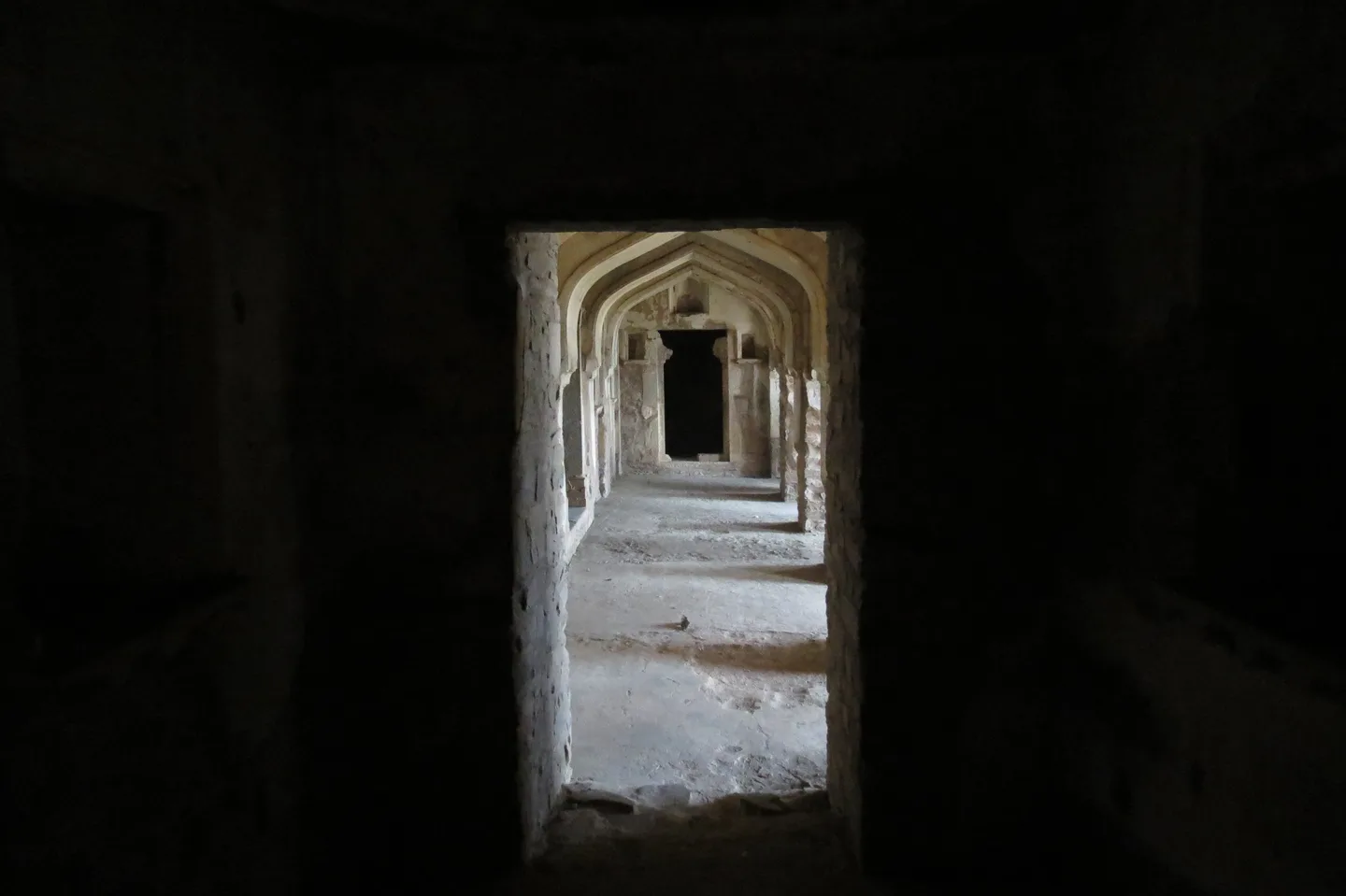
An archaeological plan and a legend offer different ways into the same place. The first shows the settlement’s physical layout; the second shows how people have imagined its fate. Keeping both in view lets Bhangarh remain atmospheric without turning a reported curse into a fact. The strongest detail may be a surviving passageway, and the question of who once walked through it.[2][1]
Plan a visit
Can you visit or stay?
Visit only. Rajasthan Tourism states that entry is restricted before sunrise and after sunset. Check current arrangements before travelling; this is not an overnight stay.
Sources behind this entry
History, local traditions and operator information are identified in the story. Access and booking details can change; check the original source before travelling.
Photo by KalkiRaj. Original photograph · CC BY-SA 4.0.

Image resized and compressed; display crops vary by screen. Image adaptations remain under CC BY-SA 4.0.