In short
What the storm left behind
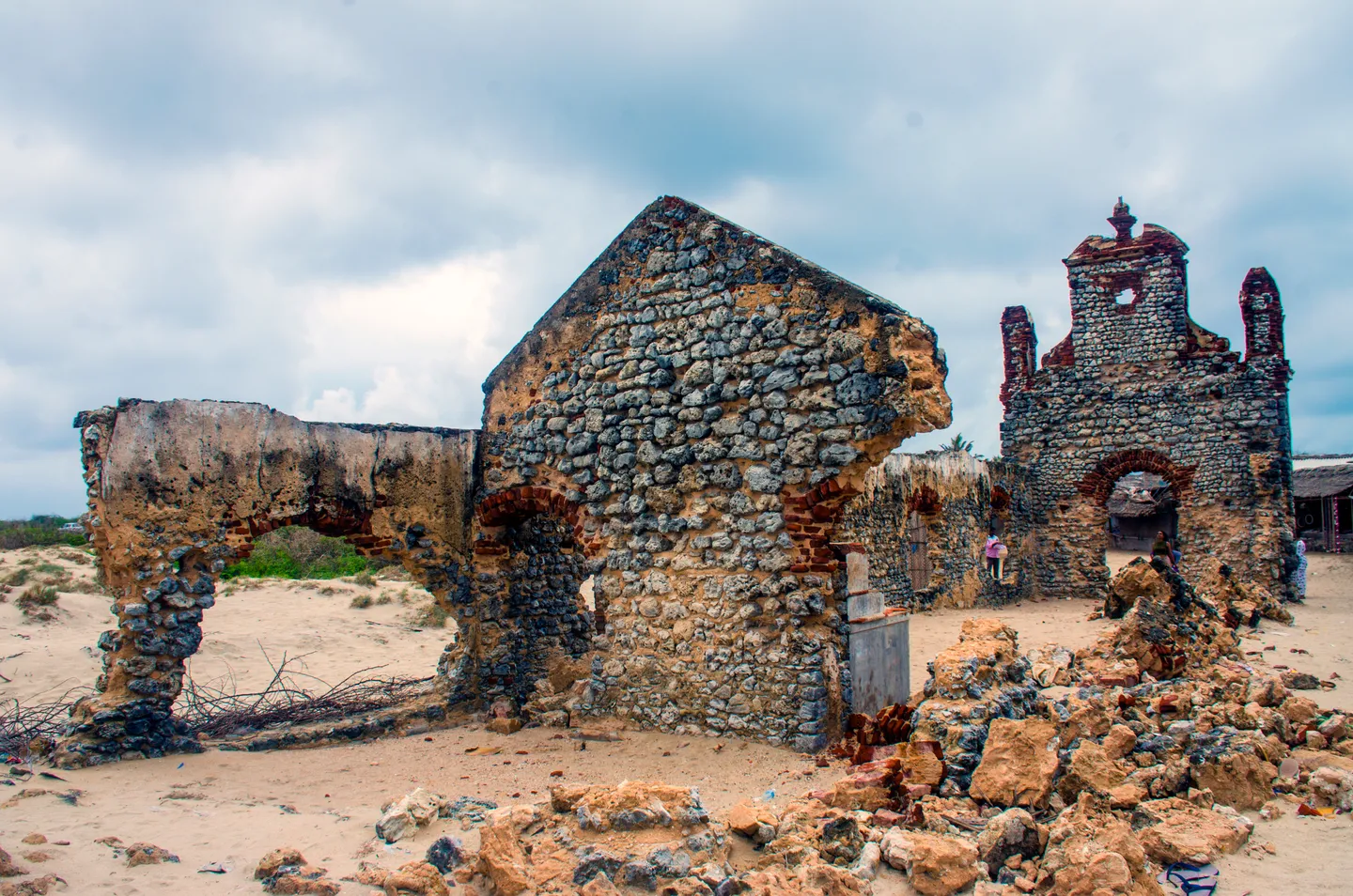
At Dhanushkodi, a ruined church stands near the end of an island. The coast makes a striking picture, but the story begins with a settlement that was lost—and continues with people whose work still depends on these waters.
Read the full story3 chapters · 2 min read
A closer look
01 / The story
A town at the island’s edge
Dhanushkodi lies at the southern tip of Rameswaram island. The district administration records the cyclone that devastated it in 1964. The ruined church is one visible reminder; the remains of the old railway station are another. These were parts of an inhabited place. Looking at them as traces of everyday life gives the landscape a weight that the phrase “ghost town” alone cannot carry.[1][2]
02 / The story
What survived the storm
The district’s account notes that the Kothandaramasamy Temple remained intact. It also records the local religious belief connecting the place to Vibhishana and Rama. That tradition belongs to the site’s spiritual significance; the cyclone belongs to its documented modern history. Both influence how people encounter Dhanushkodi, but they answer different questions about the place.[1]
03 / The story
A coast that still has a purpose
The lighthouse authority provides a useful counterpoint to the idea of a completely lifeless town. A new lighthouse was commissioned in May 2022 near the ruined station and church, between the Palk Strait and Gulf of Mannar. Its role includes helping local fishing boats navigate safely. The old settlement’s destruction did not bring the surrounding coast’s life to an end. Here, a ruin and a working navigation light tell two parts of the same continuing story.[2]
Plan a visit
Can you visit or stay?
Visit the ruins and coastal area within current local access arrangements. Check road, weather and visiting restrictions locally. This entry does not offer accommodation in the ruined settlement; use Rameswaram as a planning base.
Sources behind this entry
History, local traditions and operator information are identified in the story. Access and booking details can change; check the original source before travelling.
Photo by Rangan Datta Wiki. Original photograph · CC BY-SA 4.0.

Image resized and compressed; display crops vary by screen. Image adaptations remain under CC BY-SA 4.0.