In short
The houses remain. The community changed.
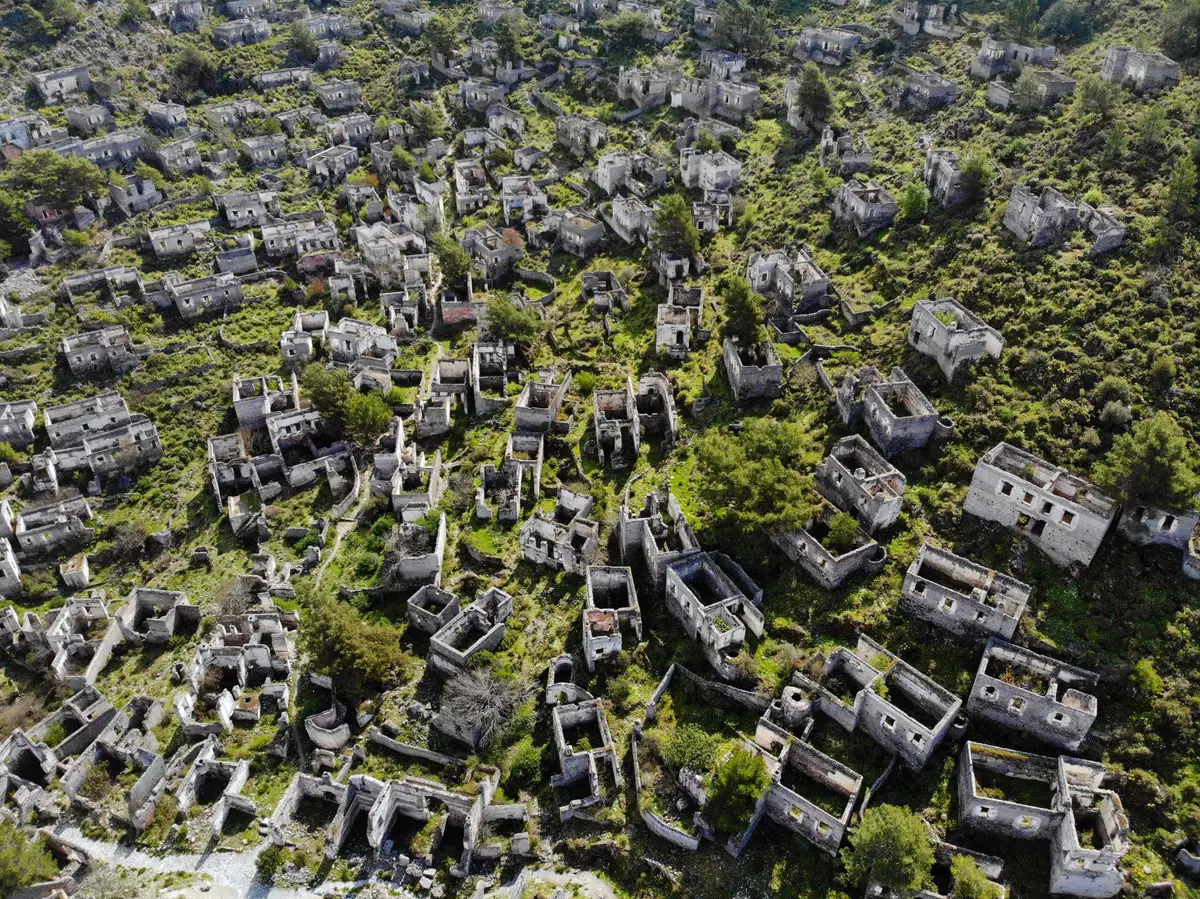
Kayaköy’s houses climb a hillside without their roofs. Their arrangement still suggests neighbours, shared daylight and familiar routes. Understanding why those rooms are empty means looking beyond the picturesque ruin to the people who had to leave.
Read the full story3 chapters · 2 min read
A closer look
01 / The story
Homes designed around one another
The Culture Ministry attributes the surviving hillside buildings to the late Ottoman Greek community. It describes two-storey homes arranged to preserve one another’s light and views, with storage below and cisterns collecting rainwater. Chapels, two large churches and a school formed part of the settlement. The houses were designed for a community, even if today the eye first notices their empty shells.[1]
02 / The story
A departure tied to population exchange
The ministry connects the settlement’s evacuation to the population exchange in the early years of the Turkish republic. That makes displacement central to its story. Its ghost-town appearance developed as wooden doors, windows and roofs deteriorated after the residents left. The missing roofs are a later visible consequence of that break in the community’s life.[1]
03 / The story
Reading the empty rooms
Kayaköy rewards a slower kind of attention. The ministry’s description directs us to homes, rainwater systems and places of worship: the evidence of how residents made a life here. Look from one house to the next and the arrangement begins to suggest the life of a neighbourhood. The empty hillside carries a story of people making homes, and then losing their place within them.[1]
Plan a visit
Can you visit or stay?
Visit only within the archaeological site’s current arrangements. Confirm opening hours and admission locally. Nearby accommodation does not mean visitors can stay inside the ruined houses.
Sources behind this entry
History, local traditions and operator information are identified in the story. Access and booking details can change; check the original source before travelling.
Photo by Wikitestaccountlogin. Original photograph · CC BY-SA 4.0.

Image resized and compressed; display crops vary by screen. Image adaptations remain under CC BY-SA 4.0.