In short
An island built around coal
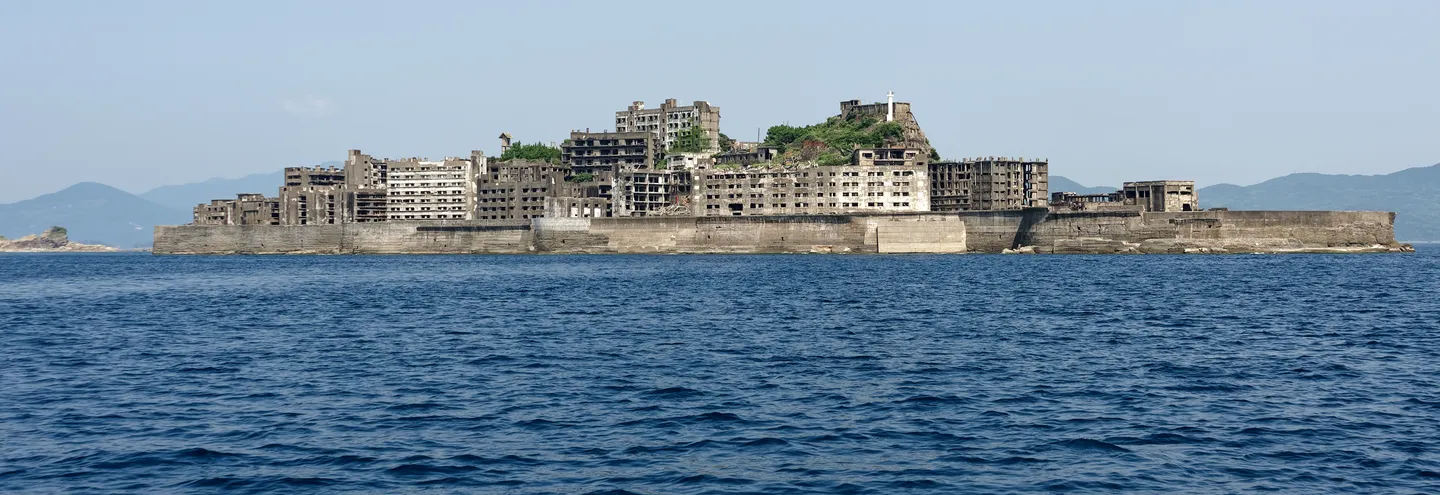
From the water, Hashima looks like a ship that never sailed. The concrete silhouette is only the beginning: inside it was a community built around coal, and a history that deserves more than a photograph of empty windows.
Read the full story3 chapters · 2 min read
A closer look
01 / The story
A whole world on a small island
Hashima’s nickname, Gunkanjima, comes from its battleship-like outline. But this was a working settlement, not a fortress. Mitsubishi developed its coal industry, and the island supported shops, a hospital, two schools and places of worship. Families lived beside the industry that kept them there. The empty buildings make more sense when you remember how many ordinary routines once fitted into this small space.[1]
02 / The story
When the coal stopped
As Japan’s energy needs changed, the mines closed around 1974 and the community departed. Buildings that had supported everyday life were left exposed to the sea and weather. Tourism returned in 2009; Hashima later became part of the Meiji industrial heritage property inscribed by UNESCO in 2015. The island’s new role is to help people understand the industrial world that produced it.[1][2]
03 / Context
The history beyond the skyline
Industrial achievement is only part of the account. The UNESCO / ICOMOS mission report from 2021 examined how wartime forced labour was being interpreted, including Koreans and others brought against their will. It found the measures for explaining that history insufficient. Reading Hashima means making room for those experiences too. An abandoned building can be visually striking while carrying a history of suffering that its silhouette cannot explain.[3]
Plan a visit
Can you visit or stay?
Visit only, on an authorised group tour from Nagasaki. Landings depend on sea and weather conditions, and visitors follow a restricted route. Check the operator’s conditions before booking.
Sources behind this entry
- Japan National Tourism Organization — Hashima
- UNESCO — Sites of Japan’s Meiji Industrial Revolution
- UNESCO / ICOMOS — full-history interpretation mission, 2021
History, local traditions and operator information are identified in the story. Access and booking details can change; check the original source before travelling.
Photo by Jakub Hałun. Original photograph · CC BY 4.0.

Image resized and compressed; display crops vary by screen.